
Important Medical Disclaimer
We are not doctors or medical professionals. The information in this article represents our research, personal experience, and opinions based on available studies and clinical data.
Never start, stop, or modify any medication without consulting your healthcare provider. GLP-1 and GIP agonists are prescription medications with potential side effects and contraindications.
This content is for educational purposes only and should not replace professional medical advice, diagnosis, or treatment.
You’ve decided to combine an incretin medication (tirzepatide or semaglutide) with a ketogenic diet. Now what?
This article is the practical playbook. No more theory - just the week-by-week protocol, the numbers you need to hit, and the solutions to problems you’ll likely encounter.
Print this out. Bookmark it. Come back when you need it.
Before You Start: The Non-Negotiables
Before we get into the protocol, there are five non-negotiables for doing this safely. Skip any of these and you’re setting yourself up for problems.
1. Medical Supervision
This isn’t optional. You need a doctor who knows you’re combining these approaches. They need to:
- Monitor your blood sugar (especially if diabetic)
- Check nutrient levels periodically
- Adjust medications as needed
- Know to call you back if you report concerning symptoms
2. Stable GLP-1 Dose First
Never start keto when you’re still titrating up on your GLP-1 medication. You need to be at your stable dose for at least 2-3 weeks before adding dietary changes.
If you’re still experiencing significant side effects from the medication, wait longer.
3. Protein Is Priority Number One
Everything else is secondary to hitting your protein target. If you only track one thing, track protein. If you can only eat a limited amount, eat protein first.
We’ll calculate your specific target below.
4. Hydration Is Non-Negotiable
Both GLP-1s and keto increase water loss. Dehydration amplifies every side effect and makes you feel terrible. Minimum 2 liters of water daily, more if you’re active.
5. Electrolyte Supplementation
You will need to supplement sodium, potassium, and magnesium. This isn’t a “nice to have” - it’s essential for preventing keto flu symptoms that stack on top of medication side effects.
Your Daily Targets
Before you start, know these numbers:
- Protein: 1.2-1.6g per kg of GOAL body weight (calculate below)
- Carbs: Under 30g net carbs per day (once in ketosis phase)
- Water: 2+ liters per day minimum
- Sodium: 3,000-5,000mg per day
- Potassium: 1,000-3,500mg per day
- Magnesium: 300-500mg per day
Calculate Your Personal Protein Target
This is the most important number in this entire protocol. Let’s calculate it.
Step 1: Determine your goal weight in kilograms
- Take your target weight in pounds
- Divide by 2.2
- Example: 160 lbs ÷ 2.2 = 73 kg
Step 2: Multiply by 1.2 to 1.6
- Lower end (1.2) if less active
- Higher end (1.6) if doing resistance training
- Example: 73 kg × 1.4 = 102 grams protein per day
Quick Reference Table:
| Goal Weight (lbs) | Low End (1.2g/kg) | High End (1.6g/kg) |
|---|---|---|
| 120 lbs | 65g protein | 87g protein |
| 140 lbs | 76g protein | 102g protein |
| 160 lbs | 87g protein | 116g protein |
| 180 lbs | 98g protein | 131g protein |
| 200 lbs | 109g protein | 145g protein |
For detailed macro calculations, see our complete macro guide.
Week-by-Week Transition Protocol
Here’s how to phase in keto while on your GLP-1 medication.
Weeks 1-4: Stabilize on Medication (Before Keto)
If you’re already stable on your GLP-1, you can skip to the next phase. If you’re just starting medication, this is what you need to focus on:
Goals:
- Adjust to your medication
- Let initial side effects subside
- Start building protein awareness (don’t change diet yet, just observe)
Actions:
- Take medication as prescribed
- Track what you’re eating (no changes yet, just awareness)
- Note your typical protein intake
- Stay hydrated
- Don’t add dietary restrictions yet
What to Expect:
- Reduced appetite (often significant)
- Possible nausea, especially after eating too much
- Some GI changes
- Getting used to your new hunger patterns
Weeks 5-6: Carb Reduction Phase
Now we start transitioning to lower carbs gradually.
Goals:
- Reduce carbs to moderate levels (not ketosis yet)
- Start prioritizing protein at every meal
- Prepare your body for ketosis
Week 5 Target:
- Carbs: Around 100g per day
- Protein: Start hitting your calculated target
- Fat: Don’t restrict, but don’t force
Week 6 Target:
- Carbs: Around 50g per day
- Protein: Hit target every single day
- Fat: Eat to satisfy hunger
Actions:
- Remove obvious carbs: bread, pasta, rice, potatoes
- Replace with protein and low-carb vegetables
- Start each meal with protein
- Keep snacking to keto-friendly options
- Continue electrolyte awareness
What to Expect:
- Possibly some fatigue as carbs drop
- Appetite may fluctuate
- Start of electrolyte adjustment
- Generally manageable transition
Weeks 7-8: Enter Ketosis
Now we drop to ketogenic carb levels.
Goals:
- Enter and maintain ketosis
- Manage the keto adaptation
- Stack electrolyte supplementation with medication
Target:
- Carbs: Under 30g net carbs per day
- Protein: Hit target without fail
- Fat: Eat to satiety (don’t force it)
Actions:
- Get strict about carb counting for these two weeks
- Supplement electrolytes actively
- Eat enough - don’t let low appetite mean undereating
- If nauseated, eat smaller portions more frequently
- Continue resistance training if you’ve started
What to Expect:
- Possible “keto flu” symptoms (fatigue, headaches, irritability)
- These may feel more intense because you’re also on medication
- Symptoms should resolve within 7-10 days if electrolytes are right
- Energy often improves significantly once adapted
Managing the Double Adaptation
You’re asking your body to do two things: process GLP-1 medication AND switch to ketosis. This can feel rough for a week or two.
If symptoms are severe:
- First, increase electrolytes dramatically (especially sodium)
- Make sure you’re eating enough (appetite suppression can cause undereating)
- If still struggling, temporarily increase carbs to 50g and try again next week
- Contact your doctor if symptoms are concerning
The goal is sustainable progress, not suffering through misery.
Month 3 and Beyond: Optimization
Once you’re through the adaptation, it’s time to optimize.
Goals:
- Fine-tune what works for you
- Build sustainable habits
- Potentially adjust medication dose (with doctor)
Actions:
- Experiment with meal timing (some people do well with fewer, larger meals)
- Add variety to your meals while staying in ketosis
- Track body composition, not just weight
- Check in with your doctor about how things are going
- Consider if medication dose can be reduced (doctor’s decision)
What to Expect:
- Stable energy throughout the day
- Significantly reduced appetite
- Weight loss continuing at steady pace
- Feeling of “new normal” settling in
Managing the Double-Whammy Side Effects
When you stack GLP-1 medication with keto, some side effects can be amplified. Here’s how to handle each one.
Nausea
Causes: GLP-1 slows stomach emptying; fatty foods can worsen this.
Solutions:
- Eat smaller portions more frequently (5-6 mini-meals)
- Eat protein first, fat second
- Avoid very greasy or heavy meals initially
- Ginger tea after meals
- Don’t lie down immediately after eating
- Wait 2-3 hours between eating and lying down
Constipation
Causes: Both GLP-1 and keto can cause this; keto often lacks fiber initially.
Solutions:
- Increase non-starchy vegetables (spinach, broccoli, cauliflower)
- Add chia seeds or flaxseed to meals
- Magnesium supplementation (especially before bed)
- Increase water intake
- Consider a fiber supplement if needed
- Gentle exercise helps
Fatigue and Weakness
Causes: Electrolyte imbalance, undereating, adaptation period.
Solutions:
- Sodium: Add salt to food, drink broth, try electrolyte drinks
- Potassium: Avocados, spinach, supplements if needed
- Magnesium: Nuts, supplements (400-500mg at night)
- Make sure you’re eating enough calories
- Rest more during adaptation
”Brain Fog”
Causes: Usually electrolyte imbalance or insufficient calories.
Solutions:
- Increase sodium significantly (this is usually the culprit)
- Check that you’re eating enough
- Give it time - usually resolves in 1-2 weeks
- MCT oil in coffee can provide quick brain fuel

Sample Lazy Keto Meal Plan for GLP-1 Users
“Lazy keto” means focusing on carbs and protein without meticulously tracking everything. This is actually ideal for GLP-1 users because it reduces complexity while appetite is suppressed.
Day 1
Breakfast (6:30am)
- 3 scrambled eggs cooked in butter
- ½ avocado
- 2 slices bacon
- Black coffee or tea
- Protein: ~30g
Lunch (12:00pm)
- Grilled chicken salad with olive oil dressing
- Mixed greens, cucumber, bell peppers
- 1 oz cheddar cheese
- Protein: ~35g
Snack (3:00pm) - if hungry
- Protein shake (whey or plant-based)
- Protein: ~25g
Dinner (6:30pm)
- 5 oz salmon with lemon and herbs
- Roasted broccoli with garlic butter
- Side salad
- Protein: ~35g
Daily Total: ~125g protein, ~20g net carbs
Day 2
Breakfast (7:00am)
- Greek yogurt (full fat, plain)
- Handful of walnuts
- Few raspberries
- Protein: ~20g
Lunch (12:30pm)
- Bunless burger patty (6 oz)
- Cheese, lettuce, tomato, mayo
- Side of pickles
- Protein: ~40g
Snack (3:30pm)
- String cheese (2 pieces)
- Handful of almonds
- Protein: ~14g
Dinner (7:00pm)
- Grilled pork chops (6 oz)
- Cauliflower mash with butter
- Steamed asparagus
- Protein: ~45g
Daily Total: ~119g protein, ~22g net carbs
Day 3
Breakfast (7:00am)
- Omelet with spinach, mushrooms, cheese
- 2 turkey sausage links
- Protein: ~32g
Lunch (12:00pm)
- Tuna salad (made with mayo) on lettuce wraps
- Cherry tomatoes
- Hard-boiled egg
- Protein: ~35g
Snack (3:00pm)
- Protein bar (low-carb, high-protein variety)
- Protein: ~20g
Dinner (6:30pm)
- Chicken thighs, skin on
- Zucchini noodles with pesto
- Parmesan cheese
- Protein: ~40g
Daily Total: ~127g protein, ~18g net carbs
Quick Tip
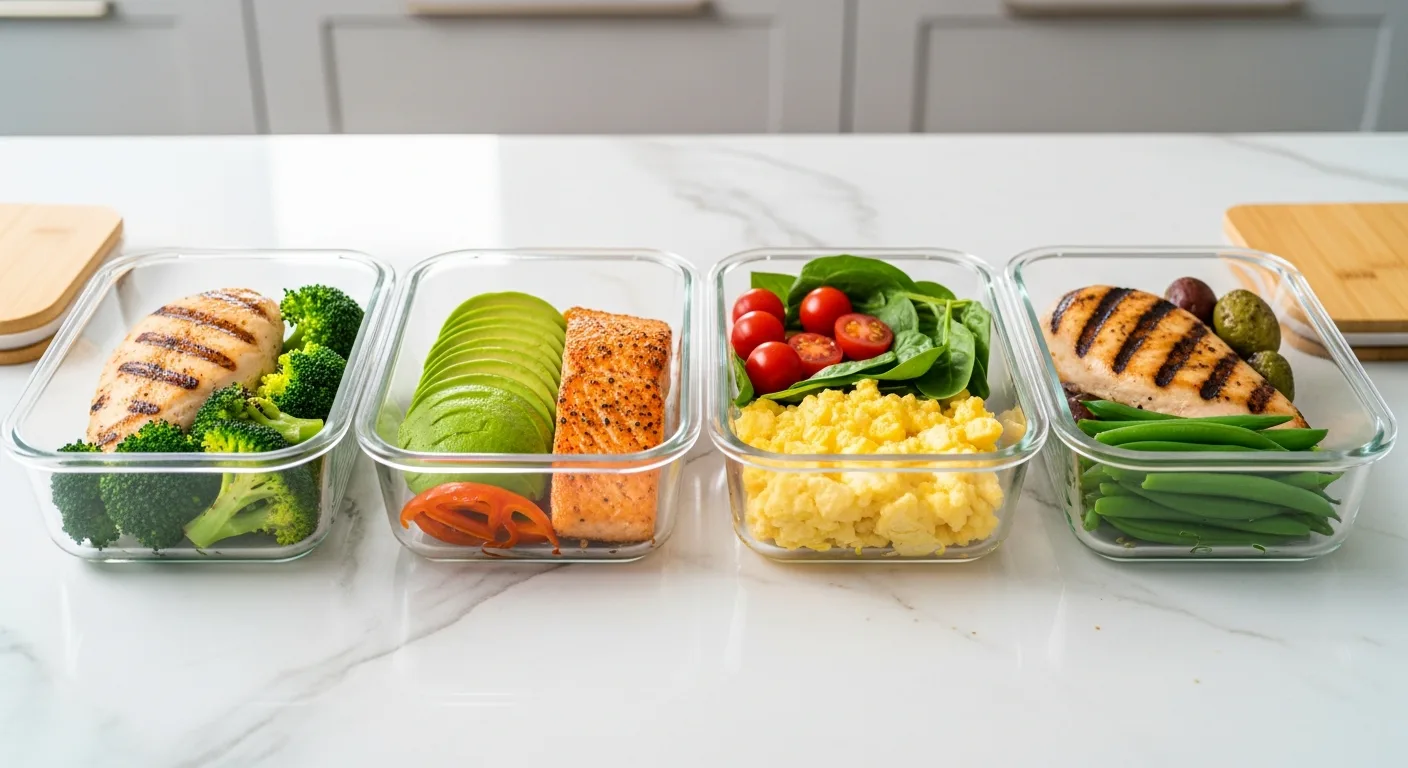
Meal Prep Tip: When your appetite is suppressed, the last thing you want to do is cook. Prep 2-3 days of protein sources at once: baked chicken thighs, hard-boiled eggs, pre-cooked ground beef. Having protein ready to eat makes hitting your targets much easier.
Protein Sources Quick Reference
When appetite is low, you need efficient protein delivery. Here are the best options:
High Protein, Easy to Eat
| Food | Protein | Notes |
|---|---|---|
| Protein shake | 25-30g | Easy when not hungry |
| Greek yogurt (1 cup) | 20g | Add nuts for fat |
| Eggs (3 large) | 18g | Quick and versatile |
| Chicken breast (4 oz) | 26g | Meal prep staple |
| Salmon (4 oz) | 25g | Omega-3 bonus |
| Ground beef (4 oz) | 22g | Fatty = satisfying |
| Cottage cheese (1 cup) | 28g | Great as snack |
| Deli turkey (4 oz) | 18g | Zero prep needed |
Emergency Protein Options
When you can barely eat but need protein:
- Bone broth with collagen powder (10-15g per cup)
- Protein shake (25-30g)
- Cheese sticks (6g each)
- Beef jerky (9g per oz)
- Pre-made protein bars (20g)
What to Track (and What to Ignore)
Tracking everything can become exhausting. Here’s what actually matters:
Track Daily
Protein intake - This is non-negotiable. Use an app or simple tally.
Net carbs - Especially in the first month. After you know what keeps you in ketosis, you can relax.
Water intake - Easy to forget when appetite is suppressed.
Track Weekly
Body weight - Daily fluctuations are normal; weekly trends matter.
Body measurements - Waist, hips, chest. Sometimes the scale doesn’t move but you’re losing inches.
How you feel - Energy, sleep, mental clarity. This matters as much as numbers.
Don’t Obsess Over
Fat grams - On keto with suppressed appetite, you’ll naturally eat fat. No need to force it.
Calories - If you’re hitting protein and staying in ketosis, calories usually take care of themselves.
Ketone levels - Testing can be fun for confirmation, but chasing higher numbers isn’t necessary.

When to Adjust or Stop
Not everyone tolerates this combination well. Here are the signs to watch for:
Yellow Flags (Adjust Approach)
- Persistent nausea despite eating carefully
- Significant fatigue beyond the first 2 weeks
- Struggling to hit protein targets consistently
- Feeling weak or dizzy regularly
Response: Increase electrolytes, make sure you’re eating enough, consider raising carbs slightly to 40-50g, talk to your doctor.
Red Flags (Consult Doctor Immediately)
- Severe abdominal pain
- Persistent vomiting (can’t keep food down)
- Symptoms of hypoglycemia (shakiness, confusion, sweating)
- Rapid heartbeat or chest discomfort
- Signs of dehydration (dark urine, dizziness, confusion)
Response: Contact your healthcare provider right away. Don’t try to push through concerning symptoms.
Signs It’s Working Well
- Steady weight loss (1-2 lbs per week average)
- Stable energy throughout the day
- Reduced hunger without feeling deprived
- Hitting protein targets feels manageable
- GI symptoms improving over time
- Mental clarity and focus
Troubleshooting Common Issues
”I Can’t Eat Enough”
This is the most common problem. Solutions:
- Eat more calorie-dense foods (nuts, cheese, fatty meats)
- Use protein shakes to supplement
- Eat 5-6 small meals instead of 3 larger ones
- Front-load protein earlier in the day when appetite is slightly better
- Accept that some days will be lower - focus on weekly averages
”I’m Not Losing Weight”
Possible causes and fixes:
- Not actually in ketosis - Hidden carbs in foods (check labels carefully)
- Too much fat, not enough protein - Rebalance toward protein
- Not eating enough - Metabolism slows when you chronically undereat
- Water retention - Common, especially around hormonal cycles; give it time
- Muscle gain - If strength training, you might be gaining muscle while losing fat
”My Energy Crashed”
Usually electrolytes. Try:
- Drink bone broth or bouillon cube in water (sodium)
- Take magnesium supplement
- Eat half an avocado (potassium)
- Give it 30 minutes - often resolves quickly
”Social Eating Is Impossible”
Strategies:
- Eat protein at home before events
- Focus on meat and vegetable dishes at restaurants
- Bring a keto dish to potlucks
- It’s okay to go slightly off-plan occasionally - one meal won’t reset everything
Your First Week Checklist
Print this out for your first week of keto on GLP-1:
Before Starting:
- Doctor is aware of my plan
- I’m stable on my GLP-1 dose (4+ weeks)
- I’ve calculated my protein target: ___g/day
- I have electrolyte supplements
- Kitchen is stocked with keto basics
- Tracking app is downloaded
Daily (Week 1):
- Hit protein target
- Stay under carb limit
- Drink 2+ liters water
- Take electrolyte supplements
- Take GLP-1 on scheduled day
- Note how I feel
End of Week 1:
- Review what worked and what didn’t
- Adjust meal plan if needed
- Check in with how I’m feeling
- Plan next week’s meals
What Comes Next
Once you’re established on this protocol (typically after 2-3 months), you have options:
Continue as-is: Some people maintain this combination indefinitely with good results.
Reduce medication: Work with your doctor to potentially lower your GLP-1 dose while using keto for appetite management.
Transition to keto maintenance: Use keto as your exit strategy from GLP-1s when you’re ready.
Adjust carb levels: Some people find a slightly higher carb “low-carb” approach (50-100g) works better long-term than strict keto.
The goal isn’t perfection - it’s finding a sustainable approach that works for your life.
Ready to build a complete plan? This protocol combined with our GLP-1 exit strategy guide gives you the full roadmap from starting to eventually tapering off medication.
GLP-1 + Keto Series
This article is part of our comprehensive series on combining GLP-1 medications with the ketogenic diet:
- Combining GLP-1 and Keto: A Practical Protocol (You are here)
- GLP-1 vs GIP: Understanding the Science
- Using Keto as Your GLP-1 Exit Strategy