
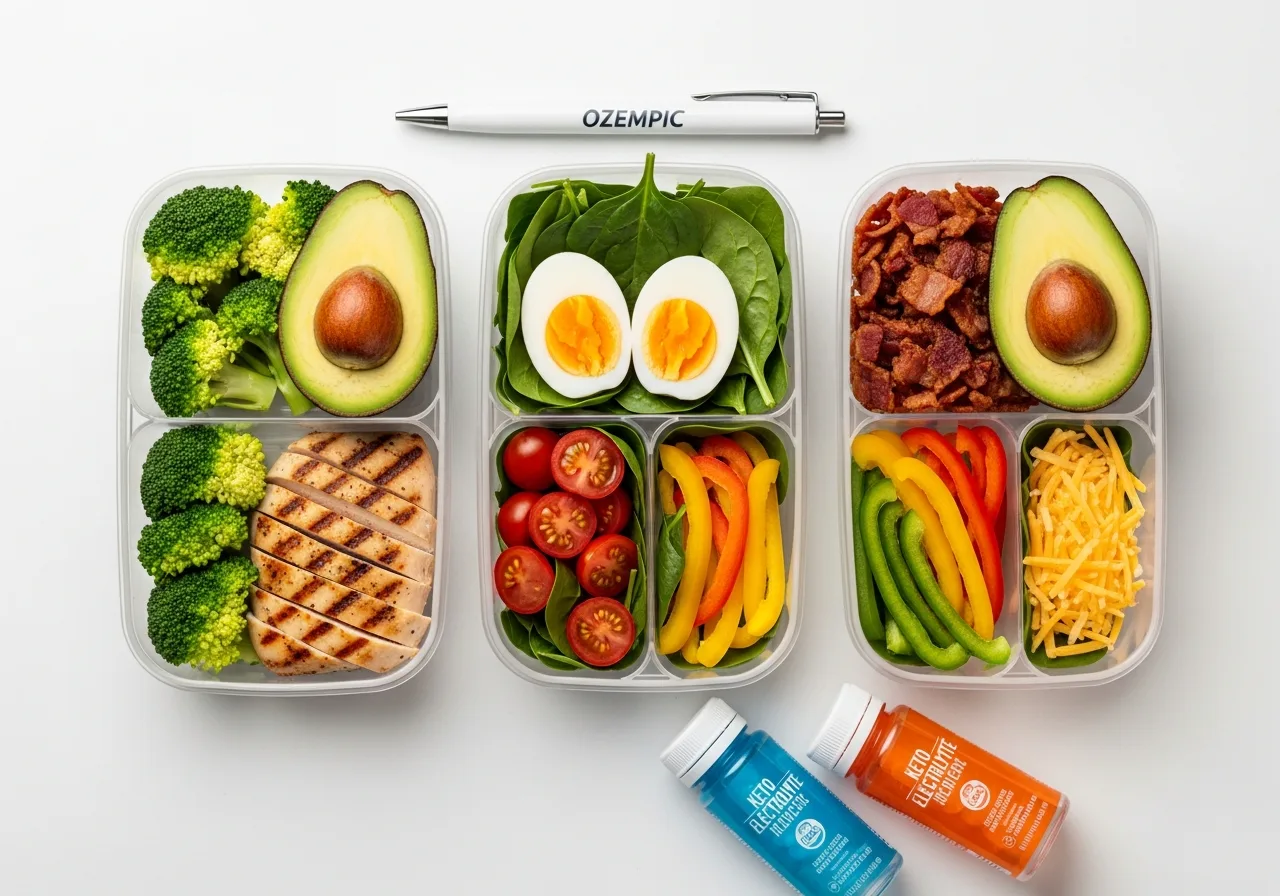
This is the question I get more than any other about GLP-1 medications (Ozempic, Wegovy, Mounjaro, Zepbound) and keto: can you actually do both at the same time? It’s a reasonable question, because both approaches are hugely popular for weight loss, and people want the strongest possible results.
The short answer: yes, you can — and many people do. Keto and GLP-1 drugs complement each other through different mechanisms. But combining them comes with specific risks that require medical supervision. This guide gives you the straight answer: what works, what to watch for, and how to do it safely.
This is not medical advice. GLP-1 drugs require a prescription and ongoing medical supervision. Never start or stop this combination without your doctor.
The Short Answer
Yes, keto and GLP-1 can be combined safely and effectively — under medical supervision. They work through complementary mechanisms:
- GLP-1 drugs suppress appetite, slow stomach emptying, and lower blood sugar.
- Keto shifts your metabolism to burn fat, stabilizes blood sugar, and reduces appetite through high protein and fat.
Together, they attack weight gain from two angles: the drug reduces appetite and calorie intake; keto changes your fuel source and stabilizes blood sugar. Many people find the combination produces stronger, more sustainable results than either alone.
How They Complement Each Other
- Appetite suppression from two directions. The drug suppresses appetite hormonally; keto suppresses it through satiating food (protein and fat). This makes it much easier to maintain a calorie deficit.
- Blood sugar stabilization. Both keto and GLP-1 lower blood sugar. Together, they can dramatically reduce glucose spikes and insulin.
- Keto can help prevent muscle loss. A protein-forward keto approach helps offset the muscle loss risk associated with GLP-1 drugs.
- Better long-term sustainability. The drug provides the initial push; keto builds the habits that last after you stop the drug.
The Risks You Need to Know
Combining keto and GLP-1 is powerful, but it’s not without risk:
1. Hypoglycemia (blood sugar too low)
The most serious risk. Both keto and GLP-1 lower blood sugar. If you’re also on insulin or sulfonylureas, combining them can push blood sugar dangerously low. Your doctor may need to adjust your medication dose. This is non-negotiable — medical supervision required.
2. Muscle loss
Both appetite suppression (from the drug) and low-carb eating can lead to undereating, which causes muscle loss. Prioritize protein and strength training. A protein-forward, not extreme-fat, keto is the way to go.
3. Nausea and GI issues
GLP-1 drugs commonly cause nausea, and extreme high-fat keto can worsen it. Keep fats moderate, not extreme. Eat small, frequent, easy-to-digest meals.
Hypoglycemia Is the Real Danger
Combining a GLP-1 drug with a very low-carb keto diet can drop your blood sugar too low — especially if you’re also on insulin or other diabetes medications. This is not a ‘watch and see’ situation. You MUST coordinate with your doctor, who may need to reduce your medication dose. Do not start this combination without medical guidance.
How to Do It Safely (The Protocol)
Step 1: Talk to your doctor first
Before combining keto and GLP-1, discuss it with your healthcare provider. They can assess your risk, adjust medications, and monitor your progress.
Step 2: Use a protein-forward, moderate-fat keto
Don’t do the extreme high-fat version. Prioritize:
- Protein at every meal (eggs, chicken, fish, Greek yogurt)
- Moderate healthy fats (avocado, olive oil, nuts) — not excessive
- Around 50g net carbs (more flexible than strict 20g keto)
Step 3: Eat small, frequent meals
GLP-1 makes large meals hard to tolerate. Eat smaller meals more often, and prioritize protein first.
Step 4: Prioritize protein and strength training
Protect your muscle. Aim for 0.7-1.0g protein per pound of body weight, and lift weights 2-3x/week.
Step 5: Monitor blood sugar, electrolytes, and how you feel
Watch for signs of low blood sugar (dizziness, shaking, confusion). Stay hydrated and manage electrolytes. If you feel unwell, adjust with your doctor.
Protein-first keto is the sweet spot
The version of keto that works best with GLP-1 drugs is protein-first, not fat-first. Prioritize eggs, chicken, fish, and Greek yogurt; keep fat moderate; and use low-carb protein shakes when you’re too full to eat solid food. This protects muscle, minimizes nausea, and is easier to sustain — the right combination for most people on GLP-1.
Who Should NOT Combine Them
Avoid combining keto and GLP-1 (or only do it with very close medical supervision) if you:
- Are on insulin or sulfonylureas (higher hypoglycemia risk)
- Have a history of eating disorders
- Are pregnant or breastfeeding
- Have severe kidney disease
- Have a history of pancreatitis (GLP-1 drugs carry this risk)
If any of these apply, talk to your doctor before considering this combination.
The Bottom Line on Combining
Combining keto and GLP-1 is a legitimate, increasingly common strategy that can produce strong results — but it’s a medical decision, not a casual choice. The benefits (appetite control, blood sugar stability, sustainable habits) are real. The risks (especially hypoglycemia and muscle loss) are manageable only with medical supervision.
The Bottom Line
Yes, you can combine keto and GLP-1 medications, and many people do it successfully. They complement each other: the drug suppresses appetite, and keto stabilizes blood sugar and burns fat. But do it with a protein-forward, moderate-fat keto (not extreme fat), prioritize protein and strength training to protect muscle, eat small frequent meals to manage nausea, and — most importantly — work with your doctor to monitor blood sugar and adjust medication. The combination can be powerful, but it must be medically supervised.
For the full strategy, see our keto and GLP-1 protocol, the keto and GLP-1 food list, and if you’re deciding between the two, keto vs Ozempic. To plan the end, read how to transition off GLP-1.