
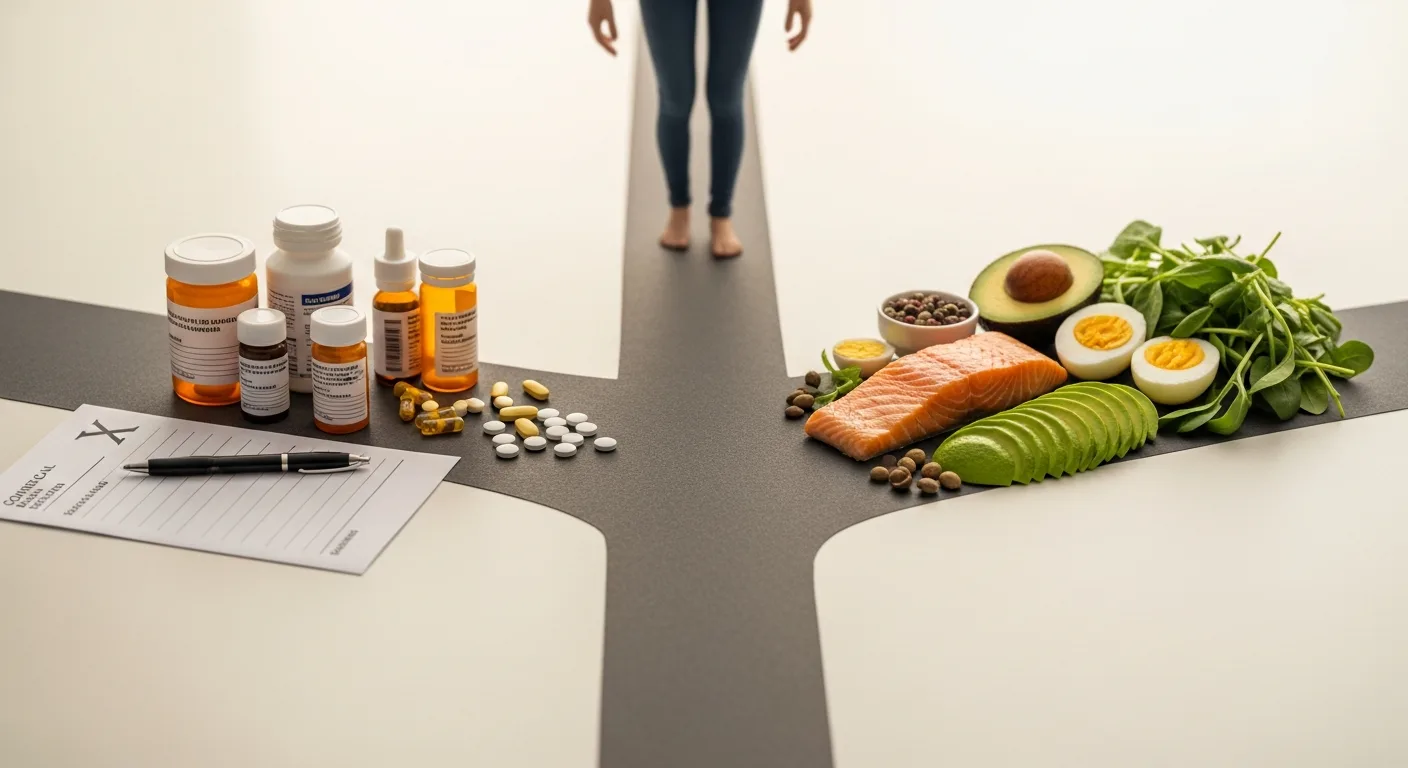
This is one of the most-asked questions in the weight-loss world right now: should you go keto, or should you use Ozempic (and other GLP-1 drugs like Wegovy, Mounjaro, Zepbound)? They’re very different tools, but people are actively comparing them because both have exploded in popularity — and many are wondering if they can do both.
The honest answer: Ozempic produces faster, more dramatic weight loss in most people, but keto is cheaper, has no drug side effects, and is far more sustainable long-term. And increasingly, people are combining them. Understanding how each works helps you make an informed decision.
This is not medical advice. GLP-1 drugs require a prescription and medical supervision. Always talk to your doctor. Our keto and GLP-1 protocol covers the combination in detail.
How Keto Works
Keto is a diet that restricts carbs to 20-50g/day to force your body into ketosis — burning fat for fuel instead of glucose. It works on weight loss by:
- Lowering insulin, the fat-storage hormone
- Suppressing appetite through high fat and protein
- Shifting metabolism to burn stored fat
Pros: Cheap (it’s just food), no prescription, no drug side effects, sustainable, builds healthy eating habits you can keep for life. Cons: Requires discipline and carb tracking; slower initial loss than GLP-1 drugs; can be hard to sustain for some.
How Ozempic Works
Ozempic (semaglutide) is a GLP-1 receptor agonist. It mimics a hormone your gut produces, which:
- Slows stomach emptying, so you feel full longer
- Signals your brain to reduce appetite and food cravings
- Lowers blood sugar
Pros: Clinically proven for significant weight loss (15% body weight in trials); strong appetite suppression; works even without strict dieting; once-weekly injection.
Cons: Expensive ($900-1000/month without insurance); can cause nausea, vomiting, and GI side effects; requires ongoing prescription; weight often returns when you stop; can cause muscle loss if protein intake isn’t managed.
The Muscle Loss Risk
One of the biggest concerns with GLP-1 drugs is muscle loss — people often lose lean mass along with fat. If you’re on Ozempic, prioritizing protein (and ideally strength training) is critical. This is where a keto approach that emphasizes protein can actually help.
Keto vs Ozempic: Head-to-Head
| Factor | Keto | Ozempic |
|---|---|---|
| Weight loss speed | Faster over months, but gradual | Fast and significant (~15% body weight) |
| Mechanism | Insulin lowering + ketosis | Appetite suppression + slowed stomach emptying |
| Cost | Cheap (food) | ~$900-1000/mo without insurance |
| Prescription needed | No | Yes |
| Side effects | Keto flu, electrolyte shifts | Nausea, vomiting, GI issues |
| Sustainability | High (can maintain) | Requires ongoing use; weight regain when stopped |
| Muscle preservation | Better (if protein-focused) | Risk of muscle loss |
| Food habits | Builds lasting habits | Doesn’t change food habits |
Can You Combine Keto and Ozempic?
Yes — and many people do. The two approaches actually complement each other well:
- Ozempic suppresses appetite — making it easier to stick to keto’s low-carb framework.
- Keto stabilizes blood sugar — which can complement Ozempic’s glucose-lowering effect.
- Protein-focused keto can help offset the muscle loss risk of GLP-1 drugs.
But there are important caveats:
- Both suppress appetite — you may eat too little, risking muscle loss and nutrient deficiency. Prioritize protein.
- Nausea is a real issue — Ozempic nausea can make low-carb, high-fat meals harder to tolerate. Some people need to ease into keto more gently.
- Blood sugar can drop too low — combining a GLP-1 drug with very low carbs can cause hypoglycemia, especially if you’re also on other diabetes meds. This must be doctor-supervised.
Hypoglycemia Risk — Talk to Your Doctor
Combining Ozempic with a very low-carb keto diet can lower blood sugar too far, especially if you’re also on insulin or sulfonylureas. This combination MUST be managed by your doctor, who may need to adjust your medication dose. Do not start this combination without medical supervision.
Which Should You Choose?
Choose keto if:
- You want a cheap, no-prescription, sustainable approach
- You prefer to build lasting food habits
- You want to avoid drug side effects
- You’re patient and can maintain discipline
Choose Ozempic if:
- You need significant, fast weight loss
- You have obesity or weight-related health conditions
- You’ve struggled with diet-only approaches
- Your doctor recommends it and you can manage the cost
Consider combining if:
- You want the appetite suppression of Ozempic with the metabolic benefits of keto
- You’re committed to protein and strength training
- Your doctor supervises the combination
The Bottom Line
Keto and Ozempic are very different tools. Ozempic produces faster, more dramatic weight loss but is expensive, requires a prescription, can cause nausea, and often leads to weight regain when stopped. Keto is cheap, sustainable, and builds lasting habits, but requires discipline and is slower. They can be combined — and many people do — but this must be doctor-supervised to avoid hypoglycemia and muscle loss. Many people use keto as a long-term maintenance strategy after stopping a GLP-1 drug.
For the detailed combination protocol, see our keto and GLP-1 guide. If you’re wondering what to eat, our keto and GLP-1 food list has specifics, and the keto grocery list helps you stock up.